Training the Future of Technology
Training is defined as the “action of teaching a person or animal a particular skill or type of behavior.” And accessibility is defined as the “quality of being able to be reached or entered.”
On the outset neither of these terms is related to technology or the web. But that’s misleading. Both nouns are central to delightful design in user interfaces.
bell hooks and the Center/Margin Theory

bell hooks’ brilliant center/margin theory is wrapped in feminist context but it applies wholly to web design. hooks insists that there is a center full of powerful people in a group but in order to exercise that power they must have people on the margins who will never have full access to that power source.
Designing to the margins in web design puts that theory in to action because designing to groups on the margins of user experience creates a more usable and accessible design for people in the center of power.
In order for groups to exist, they must have members. In order for websites to exist they must have users. Exclusion of marginal members of the group is the act that creates the power of users in the center. And most often those in the center of the group are oblivious to the power they hold. Awareness is the salve that solves that.
Moving to the margins involves the people in power moving out of the center to make bridges and connections.
Designing to the Margins
Design can accomplish this movement. By designing websites (and systems) that move out and consider users on the margins, we are building a bridge between those with power in the center and those on the edges without.
Technology and the web change faster than any auditorium or physical space has the opportunity to. That means that websites can be on the front end of the movement toward increasing access for people on the margins.
When it comes to web design one of the best ways to test those bridges is in training environments. (Affectionately known as sand boxes.) It is from the sand box that code, design, and content can be tested for viability and accessibility.
W3C and Standards for Accessibility
A web presence that accounts for the margins will likely involve understanding of Worldwide Web Consortium (W3C)’s strategies and standards for making the web more accessible to people with disabilities. It is these people that exist on the margins of power in the webosphere.
Understanding the Web Accessibility Initiative (WAI) helps us apply accessibility to our design in ways that makes the user experience more delightful for everyone in the group.
Web Content Accessibility Guidelines (WCAG) are developed with individuals and organizations around the world, with the goal of providing a single shared standard for web content accessibility that meets international standards.
The results are standards that aid websites in becoming perceivable, operable, understandable, and robust. Incorporating these standards early and often ensure a web design that is usable and future-proof.
Applying Feminist Theory to Web Design
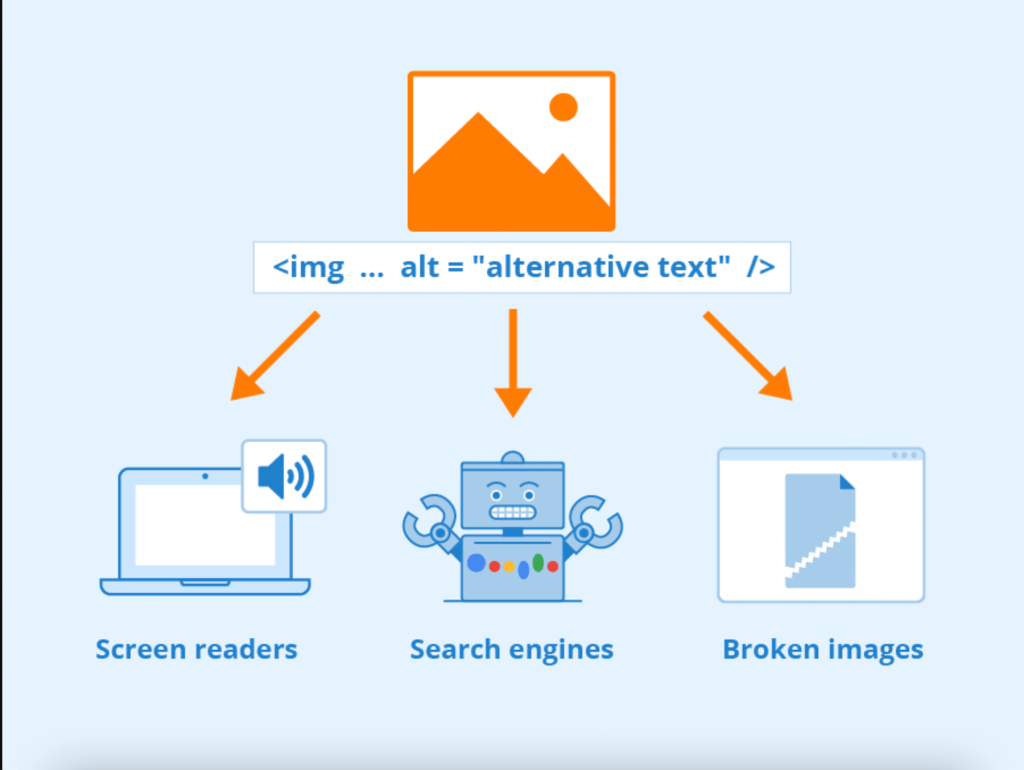
Making media accessible is critical for a simple reason: without alternatives, the information in images, audio, and video are completely hidden from people on the margins. This creates an absolute barrier to understanding the content and a generally frustrating experience for people who can’t access the information. One example is alternative image text, which is now a huge factor in search engine ranking. But even more than that, alt image text is what communicates with users who use screen readers, or have slow servers and cannot download or “see” images in the traditional sense.
Powering the Web with Feminist Theory
bell hooks’ feminist theory applied to web principles creates a powerful picture of the future of web design. Furthermore, web accessibility has become inextricably interwoven with search engine optimization.
SEO drives web traffic and 93% of online experiences start with the search function. Generations of users organize the data in their files, on their computers, and in their lives with search as the dominant feature.
Designing to the margins connects websites with these trends, creating a more sustainable web future. The largest search engine on web, Google, continues to push toward creating accessible experiences for users with differing abilities.
Keys to Creating Accessible Design
- Providing training environments that allow stakeholders to test designs and troubleshoot problems.
- Ensuring that all stakeholders are knowledgeable of the power of standards established through W3C, WAI, and WCAG.
- Considering groups on the margins before or at the same time that we design for the center.
- Alternative text, redundancy in design, and multiple ways to access and participate make a big difference for all users.
- Including accessibility in training for everyone. Always.
Design is about more than the web. Almost every experience we encounter in the physical world is designed. That includes logistical infrastructure like trains, planes, and buses all the way to our learning experiences in classrooms, on YouTube, and in offices around the world.
Designing to the margins on the web, physically, and systemically has the potential to change the way we walk through the world for the better. It’s worth the resources. It’s worth the consideration. It’s worth training people to think outside of the center.
For a longer video about designing to the edges and thinking about the science of the individual and the myth of average watch this 30 minute TedX talk by Todd Rose, co-founder of Project Variability.
bell hooks and the Margins
This post is in honor of one of the greatest American scholars of all-time, the late and great bell hooks.

Sources
Buy bell hooks’ “feminist theory: from margin to center” from Charis Books and More
Buy Sarah Horton and Whitney Quesenbery’s “A Web for Everyone” from Charis Books & More
Read more about W3C, WAI, and WCAG
Image Credits in Order of Appearance:
- bell hooks book cover image on “feminist theory: margins to center” from Amazon.com.
- Alternative Text Image from Seobility with Creative Commons Attribution-ShareAlike 4.0 International Public License.
- Image of bell hooks on a panel form October 2014 with Creative Commons Attribution-ShareAlike 4.0 International Public License taken by Alex Lozupone.
To read more about business and technology plus their overlap with marketing check out The Value of Cross-Platform Marketing.
 Whitnei the Writer
