all about love by bell hooks. Chapter 1. Clarity.

This is a close reading of all about love: new visions written by bell hooks and published in 2001. Every week I will read a chapter and complete a short writing exercise designed to probe her thinking and push mine. My commentary is in the WildeNotes.

For week 2 I tackled chapter 1, pages 3-14.

Words that Open the Chapter

CLARITY: GIVE LOVE WORDS

As society we are embarrassed by love. We treat it as if it were an obscenity. We reluctantly admit to it. Even saying the word makes us stumble and blush… Love is the most important thing in our lives, a passion for which we would fight or die, and yet we’re reluctant to linger over its names. Without a supple vocabulary, we can’t even talk or think about it directly.

Diane Ackerman

Chapter 1 is all about defining the word love. Although it is felt as a universal presence, hooks’ postulates that we do not have an adequate definition outside of ‘deep affection’ or ‘romantic desire’. She spends this chapter trying to narrow down our understanding of love by expanding the definition to include “various ingredients–care, affection, recognition, respect, commitment, and trust, as well as honest and open communication.”

5 Dope Quotes

(Longer quotes this week but only because the chapter was SO, SO good. And so, so relevant.)

Our confusion about what we mean when we use the word “love” is the source of our difficulty in loving. If our society had a commonly held understanding of the meaning of love, the act of loving would not be so mystifying. Dictionary definitions of love tend to emphasize romantic love, defining love first and foremost as “profoundly tender, passionate affection for another person, especially when based on sexual attraction.” Of course, other definitions let the reader know one may have such feelings within a context that is not sexual. However, deep affection does not really adequately describe love’s meaning. (3)

When we understand love as the will to nurture our own and another’s spiritual growth, it becomes clear that we cannot claim to love if we are hurtful and abusive. Love and abuse cannot coexist. Abuse and neglect are, by definition, the opposites of nurturance and care… An overwhelming majority of us come from dysfunctional families in which we were taught we were not okay, where we were shamed, verbally and/or physically abused, and emotionally neglected even as we were also taught to believe we were loved… Too many of us need to cling to a notion of love that either makes abuse acceptable or at least makes it seem that whatever happened was not that bad… My family of origin provided, throughout my childhood, a dysfunctional setting and it remains one. That does not mean that it is not also a setting in which affection, delight, and care are present. (6-7)

Most of us find it difficult to accept a definition of love that says we are never loved in a context where there is abuse. Most psychologically and/or physically abused children have been taught by parenting adults that love can coexist with abuse. And in extreme cases that abuse is an expression of love. This faulty thinking often shapes our adult perceptions of love. This faulty thinking often shapes our adult perceptions of love. So that just as we would cling to the notion that those who hurt us as children loved us, we try to rationalize being hurt by other adults by insisting that they love us. (9)

I wanted to know love but I was afraid to surrender and trust another person. I was afraid to be intimate. By choosing men who were not interested in being loving, I was able to practice giving love, but always within an unfulfilling context. Naturally, my need to receive love was not met. I got what I was accustomed to getting — care and affection, usually mingled with a degree of unkindness, neglect, and on some occasions outright cruelty. At times I was unkind. It took me a long time to recognize that while I wanted to know love, I was afraid to be truly intimate. Many of us choose relationships of affection and care that will never become loving because they feel safer. The demands are not as intense as loving requires. The risk is not as great. (10)

So many of us long for love but lack the courage to take risks. Even though we are obsessed with the idea of love, the truth is that most of us live relatively decent, somewhat satisfying lives even if we often feel that love is lacking. In these relationships we share genuine affection and/or care. For most of us, that feels like enough because it is usually a lot more than we received in our families of origin. (11)

Books and Authors Mentioned

hooks’ brings her references up very close to the beginning of the chapter. Towards the middle of attempting to define love, she starts to name popular media. She spends much of the chapter applying Peck’s definition of love while simultaneously explaining why it’s not the most sought after concept.

Books

WildeNotes

I learned a new term in this chapter:

Cathexis

noun

ca·​thex·​is | \ kə-ˈthek-səs  , ka- \plural cathexes\ kə-​ˈthek-​ˌsēz  , ka-​ \

Definition of cathexis

investment of mental or emotional energy in a person, object, or idea.
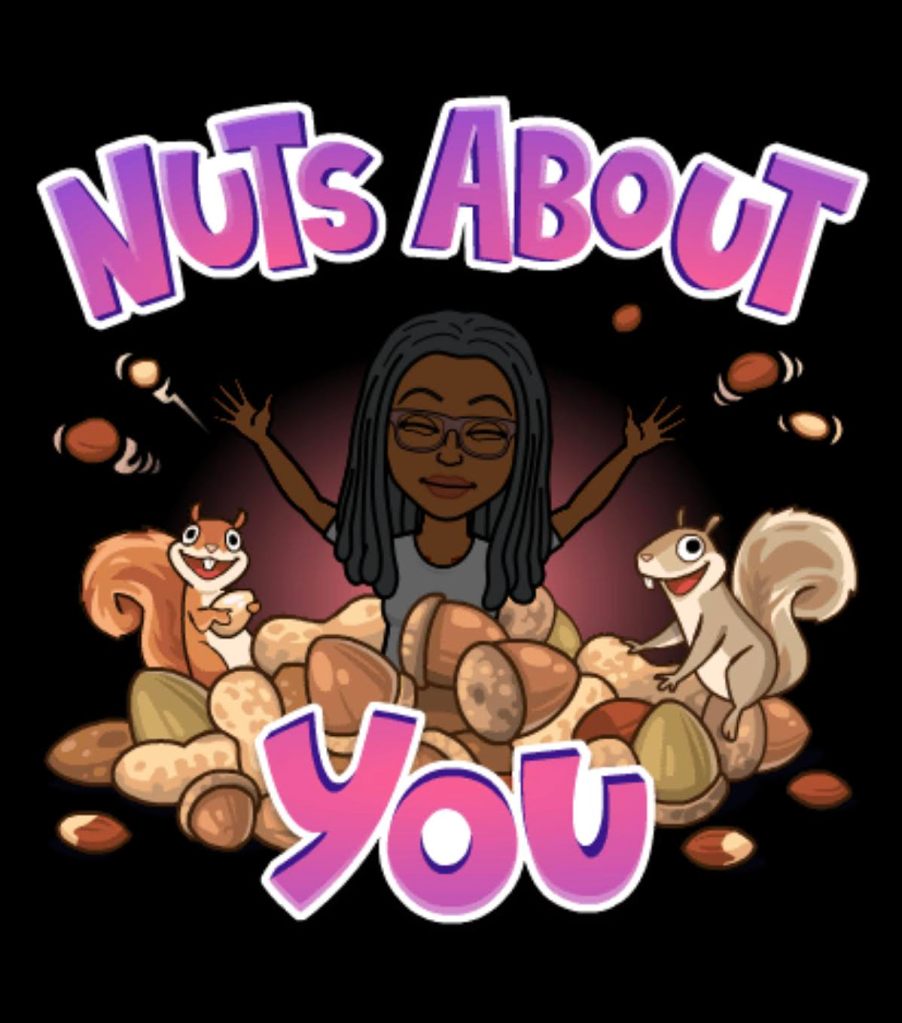
Bitmoji of the author in a pile of nuts with squirrels around and pink lettering that says "Nuts About You"
This would be me cathecting about you.

Apparently, there is a lot of confusion between cathecting and loving. Which makes a lot of sense if we think of love as a verb and cathexis as a noun. The definition of Love that hooks settles on also makes a ton of sense to me:

The will to extend one’s self for the purpose of nurturing one’s own or another’s spiritual growth… Love is as love does. Love is an act of will – namely, both an intention and an action. Will also implies choice. We do not have to love. We choose to love.

Peck via Fromm on the definition of love.

This chapter was really straightforward and simple but also mind blowing. She simplifies a concept that feels so complex and in doing so condemns a large part of what makes love complex. She provides clarity.

It’s as simple as saying, the love I have been exposed to is dysfunctional. Therefore, I must choose to love with intention. I may have to work a little harder at it, because my previous understanding was wrong. I feel like the best writing I can give this chapter is to quote her because that’s what touched me most deeply. Her words.

And if one’s goal is self-recovery, to be well in one’s soul, honestly and realistically confronting lovelessness is part of the healing process. A lack of sustained love does not mean the absence of care, affection, or pleasure.

bell hooks, all about love, 9
Bitmoji of the author reaching up towards a light ray filled with hearts.
I am reaching for the soul the love radiates from.

Confronting lovelessness in a material world driven by technology is difficult. That’s because consumerism stands in for love. Hell, on facebook and instagram, in text messages and emails, emojis, comments, and ‘likes’ all stand in for love. How is the platformed society that José van Djick writes about reconstructing our understandings of love and each other? (That is one helluva writing prompt that I will revisit one day soon.)

This study of love and lovelessness is so important to me because I am raising a child. Selfishly, I want us to share love. But beyond that, parentally, I want them to know love, be able to sense it, and walk away when it isn’t being served. How can I expect that if I cannot figure out how to model it? Towards both my child but (mostly) towards myself? How do I stop engaging in lovelessness with me? How do I handle myself with real love? And not the manufactured kind, or the kind that seeks to spoil me, or the self-care bullshit that drives whole industries… I am talking about that bell hooks shit. I want to love myself like bell teaches love.

I think I am in the right position to learn. (Can’t lie, I couldn’t put this down, I read through chapter 2 too and it’s a doozy. This. Book. Is. Already. Changing. My. Life.)

So, to answer Tina Turner, what’s love got to do with it? Everything. Love has everything to do with Tina.

Source Notes

As always, I try to comb through the book for any references I can learn more about. This chapter was heavy on hooks and low on reference material. Mostly she focused on Erich Fromm and M. Scott Peck, both of whom I looked into extensively.

Books

A Natural History of Love by Diane Ackerman

Diane Ackerman is a science historian that wrote A Natural History of Love which explores the allure of adultery, the appeal of aphrodisiacs, and the cult of the kiss. Published in 1995, it appears to be highly acclaimed but hooks does not feel that it tackles defining love:

In the introduction to Diane Ackerman’s A Natural History of Love, she declares ‘Love is the great intangible.’ A few sentences down from this she suggests: ‘Everyone admits that love is wonderful and necessary, yet no one can agree on what it is.’ Coyly she adds: ‘We use the word love in such a sloppy way that it can mean almost nothing or absolutely everything.’ No definition ever appears in her book that would help anyone trying to learn the art of loving. Yet she is not alone in writing of love in ways that cloud our understanding…

bell hooks, all about love, 4

She uses Ackerman to launch into the necessity of a shared and tangible definition of the word/concept love. She eventually adapts a meaning presented by M. Scott Peck and Erich Fromm.

The Road Less Traveled by M. Scott Peck

M. Scott Peck was an American psychiatrist and self-help author that has a great wiki page. In the second half of The Road Less Traveled, published in 1978, he tackles the nature of love which he considers is the driving force behind spiritual growth. hooks relies on him heavily in this chapter.

Like many who read The Road Less Traveled again and again, I am grateful to have been given a definition of love that helped me face the places in my life where love was lacking. I was in my mid-twenties when I first learned to understand love ‘as the will to extend one’s self for the purpose of nurturing one’s own or another’s spiritual growth.’

bell hooks, all about love, 10

She says that people struggle with Peck’s definition because of his use of the word spiritual. But he is referring to the dimension of our core reality, where mind, body, and spirit are one (hooks 13). Peck is talking about an emotion that speaks to your soul.

bell also mentions that Peck’s work is an extension of Ehrich Fromm.

The Art of Loving by Erich Fromm

Fromm was a German Jew that escaped during the Nazi Regime. He was also a psychoanalyst, social psychologist, sociologist, and philosopher. Fromm’s wiki is okay. Not as good as Peck’s. The Encyclopedia Britannica has a much better write-up on him. His book, The Art of Loving, was published in 1956 and extends his thinking on human nature.

In it he argues that love is the only answer to our need to overcome separateness and, unlike his contemporaries, he postulates that love is an activity. Something that can be learned and taught. He separates love from the emotions that we call ‘falling for someone’ or ‘lusting after one another’. He calls on love as a rational means to become better humans.

#LetsGrow #LoveAlways #WhitneiWrites

Image Credits:

Bitmoji.

Read more about my journey to understanding all about love in the previous edition.
Close Reading of all about love by bell hooks, written and edited by Whitnei Harris

Note: There is never enough time to write and research. I cut this short because like every other human I know, I have to work and parent and be productive. bell hooks’ work is sticking to my ribs though. I may re-read this book annually, though I am sure I will do so faster than I am this first time. If you read this far, then I hope life finds you well and willing to learn more about love. And if you read it before I have the chance to come back through and edit more thoroughly, please forgive the typos and miswordings.

all about love by bell hooks. Preface & Introduction.

This is a close reading of all about love: new visions written by bell hooks and published in 2001. Every week I will read a chapter and complete a short writing exercise designed to probe her thinking and push mine. My commentary is in the WildeNotes.

I started with the 24 pages of preface and introduction on the first Sunday of 2022.

The book, all about love, centered on a flowered blanket.

Words that Open the Chapter

GRACE: TOUCHED BY LOVE

It is possible to speak with our heart directly. Most ancient cultures know this. We can actually converse with our heart as if it were a good friend. In modern life we have lost this essential art of taking time to converse with our heart.

Jack Kornfield

These are the words that begin the introduction to hooks’ scholarly work on love. They introduce themes and raise questions. Namely, why don’t we take the study of love seriously? Why don’t we question love and theorize about love with the same intensity that we do money, sex, or power? Is meaningful love missing from our culture? From our interpersonal lives?

3 Dope Quotes

In everyday life males and females alike are relatively silent about love. Our silence shields us from uncertainty. We want to know love. We are simply afraid the desire to know too much about love will lead us closer and closer to the abyss of lovelessness. (xxvi)

Everyone wants to know more about love. We want to know what it means to love, what we can do in our everyday lives to love and be loved. We want to know how to seduce those among us who remain wedded to lovelessness and open the door to their hearts to let love enter. (xxvii)

Everywhere we learn that love is important, and yet are bombarded by its failure… This bleak picture in no way alters the nature of our longing. We still hope that love will prevail. We still believe in love’s promise. (xxvi)

Books and Artists Mentioned

The preface largely focuses on bell’s own experience with love and lovelessness. But the introduction begins to look outward to ways society has chronicled or considered love as fantasy and reality.

Books

Poetry

Music

  • “What’s love got to do with it?” Tina Turner, xviii

Oh-oh, what’s love got to do, got to do with it?
What’s love but a second-hand emotion?
What’s love got to do, got to do with it?
Who needs a heart when a heart can be broken?

Tina Turner in “What’s love got to do with it?”

WildeNotes

Unfortunately, I think that Hollywood, mass media, and consumerism have obliterated our understanding of love. With a lot of help from the 40-80 hour work week. (Is the gig economy murdering our opportunities for love? Does love require time? Attention? I have to keep reading!) The love that hooks’ alludes to and searches for is not the love that immediately comes to mind when the word is mentioned.

In her analysis she points out that we heavily favor fantastical accounts of love written by men. I think that is because love has become another beacon of the patriarchy. Another way to exercise one-way control. She mentions Tina Turner’s song, “What’s love got to do with it?” and I think of movies like “A Thin Line Between Love and Hate” or the many, many, many scenes of Black women, all women, being made the fool for serving up too much love on a platter to someone that is too wrong. It also makes me think of Mary J. Blige, featuring Drake, “Mr. Wrong”:

I don’t get it, I would hate to think I tricked ’em

They fall victim to my system, guess I sure know how to pick ’em

And I’m always her regret, yeah, I’m always her regret

And I always make it harder on whoever’s coming next

It goes up and down, it’s just up and down

She’s crying now but she’ll laugh again

Cause we on the rise and she here with us

In expensive shit, just keeps happening

She loves it, she stares at me like who does this

And we hold hands while I pray that she’s not the type to hold grudges, I’m wrong…

When he put that loving on me

I can’t think of nothing

That’ll make me walk out

I’m holding on

I love my Mr. Wrong

He be kissing and touching on me

I can’t help but love him

I must be outta my mind

For going so strong

I love my Mr. Wrong

A snippet of Drake and Mary J. Blige in “Mr. Wrong”
Music video of “Mr. Wrong”.

Has love become synonymous with abuse via our art forms? How many people can identify with this understanding of love? That they are mistreated repeatedly but then the kisses and affection bring them back to the arms of their Mr. Wrong? How many of us are just dying to be held? So much that we have withheld any real analysis of what love is and what it means from ourselves?

The honest truth is that you can major in money. They call it economics or finance. You can major in power. Some people call it political science, and others call it theology. And you can focus your studies on sex. Whether that is through biology or psychiatry. There are multiple routes to material stability within these fields, albeit more security in some than others. But who can achieve stability with the study of love? Self-help gurus? Internet quacks? Is it that my understandings of the word love right now are too narrow? I have come into contact with various other professionals, from teachers to social workers, waiters to writers, and none seem to have devoted their life to the study of love.

The closest I have encountered came from two white women, Marianne Williamson and her interpretations of the Course of Miracles (she has written multiple books about her insights), and Brené Brown and her statistical studies of vulnerability (also featured across multiple titles). And a book called The Mastery of Love by Don Miguel Ruiz, an author and thinker that specializes in the Toltec tradition.

My short-sided, or lopsided understandings of love are why I have undertaken the study of all about love this year. I want to learn more about what it means to truly love. In all faucets of life, particularly in the midst of a raging pandemic and the roll back of democracy and civil rights, I want to know more about love and how it can keep me centered. How it can keep me honest. And how it can keep me alive.

My center text is bell hooks, she will begin my year. When I finish, I will work my way through the works of Williamson, Brown, and Ruiz, while also revisiting essays by Martin Luther King Jr, Nelson Mandela, and Ghandi on the beloved community. (How do we create love in our homes but also love in our communities?) I am looking for overlapping themes and contrasting understandings. My goal is to seek more queer theory in the realm of love too. How much control do we have over who and how we love? And how much of it is dictated to us by our environment, including the things we watch, listen to, and feel? I am curious. I find myself mighty curious about love. 2022 is as good a year as any to fuck around, and find out. The intro and preface to this book have me pumped.

#LetsGrow #LoveAlways #WhitneiWrites

Source Notes

I like to comb through texts to see who has influenced the thinker that is theorizing about the topic I am trying to learn about. Sometimes, I will pick these books up to read, especially if I find them on sale or easily available. Other times, I will look for essays and reviews that engage the text too. It’s also a reminder to be on the look out for interviews or other media that involves or engages the authors or artists involved in this work. Perspective is everything.

Books

When All You’ve Ever Wanted Isn’t Enough by Harold Kushner

“I am afraid that we may be raising a generation of young people who will grow up afraid to love, afraid to give themselves completely to another person, because they will have seen how much it hurts to take the risk of loving and have it nor work out. I am afraid that they will grow up looking for for intimacy without risk, for pleasure without significant emotional investment. They will be so fearful of the pain of disappointment that they will forgo the possibilities of love and joy” (from all about love, xvii)

Harold Kushner is a prominent American rabbi and author of more than 14 books, including two bestsellers. Kushner’s wikipedia page is well done. When All You’ve Ever Wanted is considered a theological text. Which is interesting considering hooks’ observations about religion and love:

“While ours is a nation wherein the vast majority of citizens are followers of religious faiths that proclaim the transformative power of love, many people feel that they do not have a clue as to how to love. And practically everyone suffers a crisis of faith when it comes to realizing biblical theories about the art of loving in everyday life.”

bell hooks, all about love, xxvi

Bitch: In Praise of Difficult Women by Elizabeth Wurtzel

“None of us are getting better at loving: we are getting more scared of it. We were not given good skills to begin with, and the choices we make have tended only to reinforce our sense that it is hopeless and useless” (from all about love, xix).

Elizabeth Wurtzel was an American writer and journalist known for documenting her personal struggles with depression, addiction, and recovery. She died from breast cancer at the age of 57. She has a very well-done wiki. The title of this book reminds of a collection of short stories by Roxane Gay called Difficult Women. One day, I will re-read them together. Wurtzel’s book is a series of essays about women that derive their power from sexuality. According to goodreads, “Bitch tells a tale both celebratory and cautionary as Wurtzel catalogs some of the most infamous women in history, defending their outsize desires, describing their exquisite loneliness, championing their take-no-prisoners approach to live and love.”

A Little Book On Love by Jacob Needleman

Jacob Needleman is a professor of philosophy at San Francisco State University with an impressive resumé including education at Yale, Harvard, and in Germany. He’s written several books and accomplished numerous accolades, all featured on his website.

According to goodreads, A Little Book On Love “explores the greatest works of philosophy, myth, and sacred wisdom to offer a bold new interpretation of why two people are brought together in the first place…[It] shows us how true love can transcend time and the difficulties of daily life.”

bell hooks says that virtually all the major narratives Needleman comments on in this book are written by men: “His list of significant references doesn’t include books written by women” (xxi).

And There We Wept by bell hooks

A book of poetry published in 1978 while hooks’ was a professor and lecturer of Ethnic Studies at the University of Southern California. It is the first book she published under her chosen pen-name which is also her great-grandmother’s name.

hooks references the book in all about love:

“Death became my chosen topic. No one around me, professors and students alike, doubted a woman’s ability to be serious when it came to thinking and writing about death. All the poems in my first book were on the topic of death and dying. Even so, the poem that opened the book, “The woman’s mourning song” was about the loss of a loved one and the refusal to let death destroy memory. Contemplating death has always been a subject that leads me back to love” (xxii).

The Bridges of Madison County by Robert James Waller

A 1992 romance novella that became a best seller and a film. It’s about an Italian woman living on a farm in Iowa that engages in an affair with a National Geographic photographer. hooks has thoughts:

“…when men appropriate the romance genre their work is far more rewarded than is the writing of women. A book like The Bridges of Madison County is the supreme example. Had a woman penned this sentimental, shallow story of love (which did, have its moments) it is unlikely it would ever have become such a major mainstream success, crossing all boundaries of genre” (xxiii).

Sidenote: This is why women change their pen names to be ambiguous or presenting.

Creating Love: The Next Great Stage of Growth by John Bradshaw

Bradshaw’s website says he is a philosopher, councelor, theologian, and teacher. He is the author of six books, and three are New York Times bestsellers. Creating Love is meant to give insights into how to stop making the same mistakes with love over and over. It is one of hooks’ favorite books on the topic.

“[Bradshaw] valiantly attempts to establish the link between male domination (the institutionalization of patriarchy) and the lack of love of families. Famous for work that calls attention to the ‘inner child,’ Bradshaw believes that ending patriarchy is one step in the direction of love. However, his work on love has never received ongoing attention and celebration. It did not get the notice given work by men who write about love while affirming sexist-defined gender roles” (xxiv).

Men are from Mars, Women are from Venus by John Gray

Men are from Mars, Women are from Venus has some incredible statistics. It is one USA Today’s 10 must influential books of the last quarter century. And it was the number 1 best-selling hardback of the 1990s.

John Gray has written over 20 books, most focused on helping men and women better understand and respect their differences in personal and professional life. His work troubles hooks:

“And even though John Gray’s work troubles me and makes me mad, I confess to reading and rereading Men Are from Mars, and Women Are from Venus” (xxv). According to hooks, this work makes use fo feminist perspectives on gender roles but remains “wedded to belief systems, which suggest that there are basic inherent differences between women and men” (xxv-xxvi).

Image Credit:

Picture by me. This is the first of bell hooks’ work that I have owned. It’s all red and titled, all about love: new visions.

Designing to the Margins

Training the Future of Technology

Training is defined as the “action of teaching a person or animal a particular skill or type of behavior.” And accessibility is defined as the “quality of being able to be reached or entered.”

On the outset neither of these terms is related to technology or the web. But that’s misleading. Both nouns are central to delightful design in user interfaces.

bell hooks and the Center/Margin Theory

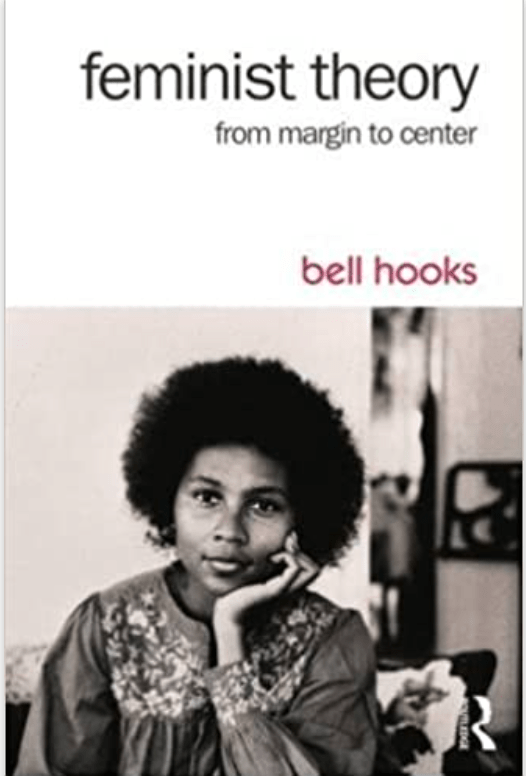
Young bell hooks in black and white looking directly at the camera from her book cover.
Book written by bell hooks “feminist theory: from margin to center”, published in 1984.

bell hooks’ brilliant center/margin theory is wrapped in feminist context but it applies wholly to web design. hooks insists that there is a center full of powerful people in a group but in order to exercise that power they must have people on the margins who will never have full access to that power source.

Designing to the margins in web design puts that theory in to action because designing to groups on the margins of user experience creates a more usable and accessible design for people in the center of power.

In order for groups to exist, they must have members. In order for websites to exist they must have users. Exclusion of marginal members of the group is the act that creates the power of users in the center. And most often those in the center of the group are oblivious to the power they hold. Awareness is the salve that solves that.

Moving to the margins involves the people in power moving out of the center to make bridges and connections.

Designing to the Margins

Ceasar McDowell, a Professor of the Practice of Civic Design at MIT, talks for under 2 minutes about the importance of designing to the margins.

Design can accomplish this movement. By designing websites (and systems) that move out and consider users on the margins, we are building a bridge between those with power in the center and those on the edges without.

Technology and the web change faster than any auditorium or physical space has the opportunity to. That means that websites can be on the front end of the movement toward increasing access for people on the margins.

When it comes to web design one of the best ways to test those bridges is in training environments. (Affectionately known as sand boxes.) It is from the sand box that code, design, and content can be tested for viability and accessibility.

W3C and Standards for Accessibility

A web presence that accounts for the margins will likely involve understanding of Worldwide Web Consortium (W3C)’s strategies and standards for making the web more accessible to people with disabilities. It is these people that exist on the margins of power in the webosphere.

Understanding the Web Accessibility Initiative (WAI) helps us apply accessibility to our design in ways that makes the user experience more delightful for everyone in the group.

Web Content Accessibility Guidelines (WCAG) are developed with individuals and organizations around the world, with the goal of providing a single shared standard for web content accessibility that meets international standards.

The results are standards that aid websites in becoming perceivable, operable, understandable, and robust. Incorporating these standards early and often ensure a web design that is usable and future-proof.

Applying Feminist Theory to Web Design

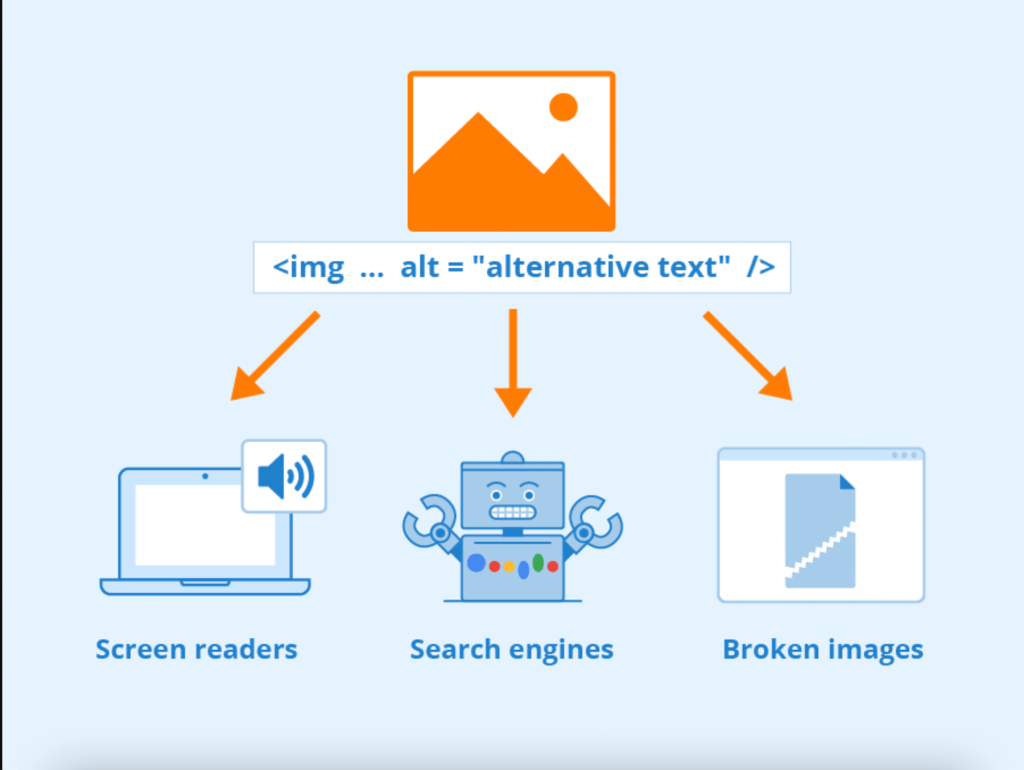
Making media accessible is critical for a simple reason: without alternatives, the information in images, audio, and video are completely hidden from people on the margins. This creates an absolute barrier to understanding the content and a generally frustrating experience for people who can’t access the information. One example is alternative image text, which is now a huge factor in search engine ranking. But even more than that, alt image text is what communicates with users who use screen readers, or have slow servers and cannot download or “see” images in the traditional sense.

Icon with alt text that branches to three other icons: screen readers, search engines, and broken images.
Alt text serves more than one purpose. It helps with accessibility and affects SEO.

Powering the Web with Feminist Theory

bell hooks’ feminist theory applied to web principles creates a powerful picture of the future of web design. Furthermore, web accessibility has become inextricably interwoven with search engine optimization.

SEO drives web traffic and 93% of online experiences start with the search function. Generations of users organize the data in their files, on their computers, and in their lives with search as the dominant feature.

Designing to the margins connects websites with these trends, creating a more sustainable web future. The largest search engine on web, Google, continues to push toward creating accessible experiences for users with differing abilities.

Keys to Creating Accessible Design

  1. Providing training environments that allow stakeholders to test designs and troubleshoot problems.
  2. Ensuring that all stakeholders are knowledgeable of the power of standards established through W3C, WAI, and WCAG.
  3. Considering groups on the margins before or at the same time that we design for the center.
  4. Alternative text, redundancy in design, and multiple ways to access and participate make a big difference for all users.
  5. Including accessibility in training for everyone. Always.

Design is about more than the web. Almost every experience we encounter in the physical world is designed. That includes logistical infrastructure like trains, planes, and buses all the way to our learning experiences in classrooms, on YouTube, and in offices around the world.

Designing to the margins on the web, physically, and systemically has the potential to change the way we walk through the world for the better. It’s worth the resources. It’s worth the consideration. It’s worth training people to think outside of the center.

For a longer video about designing to the edges and thinking about the science of the individual and the myth of average watch this 30 minute TedX talk by Todd Rose, co-founder of Project Variability.

bell hooks and the Margins

This post is in honor of one of the greatest American scholars of all-time, the late and great bell hooks.

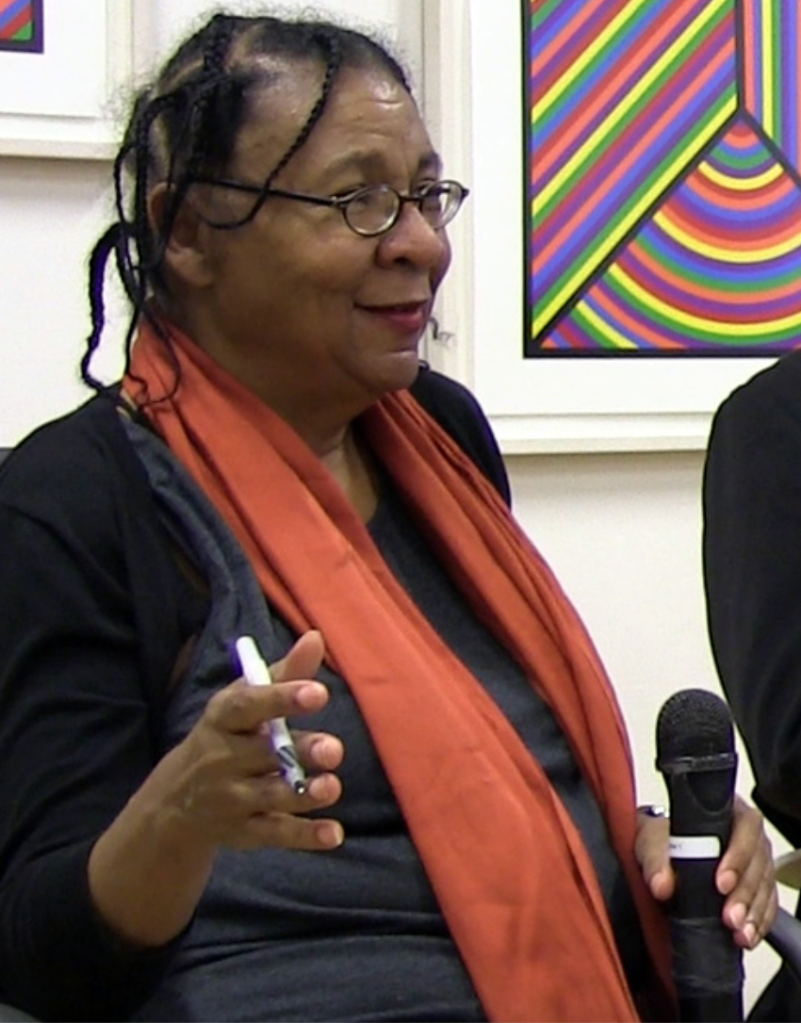
bell hooks seated on a panel with a microphone in one hand and a pen in another.
To the brilliant, forward-thinking mind of bell hooks: September 25, 1952 – December 15, 2021. Forever rest in peace.

Sources

Buy bell hooks’ “feminist theory: from margin to center” from Charis Books and More

Buy Sarah Horton and Whitney Quesenbery’s “A Web for Everyone” from Charis Books & More

Read more about W3C, WAI, and WCAG

Image Credits in Order of Appearance:

Pink title picture with the words "Designing to the Margins feat bell hooks" Written and Edited by Whitnei Harris

To read more about business and technology plus their overlap with marketing check out The Value of Cross-Platform Marketing.

The Value of Cross-Platform Marketing


In Culture of Connectivity, José van Djick asks a pertinent question:

What are the implications of a platformed sociality that is conditioned by a corporate sector, wherein partnerships and competition define the coded ground layer upon which a myriad of apps is built?

See Sources

The book was published in 2013 which is eons ago in social media years but she is spot-on with her line of inquiry.

One of the implications is the normalization of cross-platform marketing, which is essentially an attempt to further trap consumers in an ecosystem geared towards influencing their attention and
ultimately their pockets. As van Djick notes, the invisible hand in cross-platform marketing is code and algorithms.

Cross-platform marketing attempts to solve problems created by fragmentation in media delivery. Nikola Brown pointed out in Skyword, “once upon a time there was just one media source: newspapers…” When one wanted to escape content, you put the newspaper down and
walked away. Brown continues, “then came radio, followed by TV,” and we all know how captivating TV can be. It is much harder to turn it off and escape content being marshaled by creative corporate entities.

There have been many movements against commercials on TV or against sitting in front of the TV for extended periods of time in general. Yet, there is an off button. Well, Brown goes on, “before we knew it the multi-platform content of the internet emerged, fragmenting digital channels into thousands of pieces and allowing complex two way
communication” (Brown, 2017).

Is there an off button to this type of connectivity?

Professor van Djick talks about her newest book, A Platform Society, written with Thomas Poell and Martijn de Waal.

A perfect example? Television shows like Humans that attempt to reach you at every level of your imagination. The show debuted in 2017, and I must admit that I watched every episode and loved it.

IMDB Description of Humans — In a parallel present where the latest must-have gadget for any busy family is a ‘Synth’ – a highly-developed robotic servant that’s so similar to a real human – is transforming the way we live.

Marketing for the science fiction show was innovative, far reaching, and reality-bending.

  1. Newspaper and print advertisement
  2. Video recall advertisements
  3. Website
  4. Social media channels for the fictional company that was at the center of the series
  5. Facebook chat bot acting as a technical support Synth to help answer questions
  6. Faux e-bay site staged to buy synths
  7. Synthetic Human Collection Service trucks that were deployed in several cities

That is an intense and multilayered marketing campaign. I am sure that Humans was trending on multiple platforms during the show’s height.

Cross-platform marketing enables fully reimagined techno-peer pressure that is a “hybrid social and technological force” (van Djick, 2013, 156) connecting people with things, algorithms, ideas, and each other. In the context of capitalism and with the absence of regulation, the driving forces behind this phenomena are almost exclusively money. In the marketing sphere this is beyond valuable. Cross-platform marketing helps you reach your potential customer on various platforms. It also facilitates accessibility by offering consumers multiple channels and ways to consume said content and making it easier to pass that content along to like-minded individuals.

“When people see what others like, they want it more — another consequence of peer pressure — and knowing what people want is the basis of constructing needs, as most marketers learn their first week on the job”.

José van djick, Culture of connectivity, 157

José van Djick states very clearly the core value in cross-platform marketing: By placing content on multiple platforms, you are giving people more opportunities to engage with you which will make you trend, improving your rank, in turn providing greater visibility for your product or idea which is what marketing is about.

Sources


Nicola Brown’s 2017 Article in Skyword entitled, “Why Multi-Platform Content is Key for Marketing”

  • https://www.skyword.com/contentstandard/multi-platform-content-key-marketing-younger-generations
  • Author Bio: Nicola is an international award-winning writer, editor and communication specialist based in Toronto. She has stamped her career passport all over the communication industry in publishing, digital media, travel and advertising. She specializes in print and digital editorial and content marketing, and writes about travel, food, health, lifestyle, psychology and personal finance for publications ranging from the Toronto Star and WestJet Magazine to Tangerine Bank and Fidelity Investments. Nicola is owner and principal of communication consultancy Think Forward Communication, and Editor-in-Chief at AnewTraveller.com. Nicola revels in the visceral, experiential side of travel, and will passionately argue for its psychological paybacks, especially after a few glasses of wine.

José van Djick’s 2013 book, The Culture of Connectivity: A Critical History of Social Media, printed by the Oxford Press.

  • Wiki Bio: Johanna Francisca Theodora Maria “José” van Dijck is a new media author and a distinguished university professor in media and digital society at Utrecht University since 2017. From 2001 to 2016 she was a professor of Comparative Media Studies where she was the former chair of the Department of Media Studies and former dean of the Faculty of Humanities at the University of Amsterdam. She is the author of ten (co-)authored and (co-)edited books including Mediated Memory in the Digital Age; The Culture of Connectivity.; and The Platform Society. Public Values in a Connective World. Her work has been translated into many languages and distributed to a worldwide audience. Since 2010, van Dijck has been a member of the Royal Netherlands Academy of Arts and Sciences. In 2015 she was elected by Academy members as the president of the organisation and became the first woman to hold the position.

WildeNotes

Cross-platform marketing is a valuable resource for corporations, mom-and-pop businesses, and entrepreneurs. But, it can be challenging for people struggling with mental illness. If your condition already makes you question reality, having a show like Humans reaching out on so many platforms and in so many ways can easily induce psychosis. Put simply, psychosis is a loss of touch with external reality. Are our marketing plans encouraging people to lose touch with what is real?

I think that in the disinformed environment that has supported anti-vaxxing and the rise of demagoguery, it is fair to question how multi-platform marketing can destabilize individual mental health, as well as group/societal wellbeing. It is all fun, games, and sales until people get hurt.

Humans marketing by itself is harmless. The show was really good. But how are people in power using these same principles to influence or persuade the public? Further, can marketing be ethical? And, how?